







For most of modern sports history, being openly gay was seen as incompatible with elite competition. Locker rooms were policed by silence, careers were guarded by secrecy, and athletes were told—explicitly or not—that authenticity came at the cost of opportunity. Over the past few decades, that myth has been steadily dismantled by courageous athletes who chose truth over fear and visibility over comfort.
Their stories are not just about sexuality. They’re about leadership, resilience, and the evolving culture of sport itself.
The Pioneers Who Broke the Silence
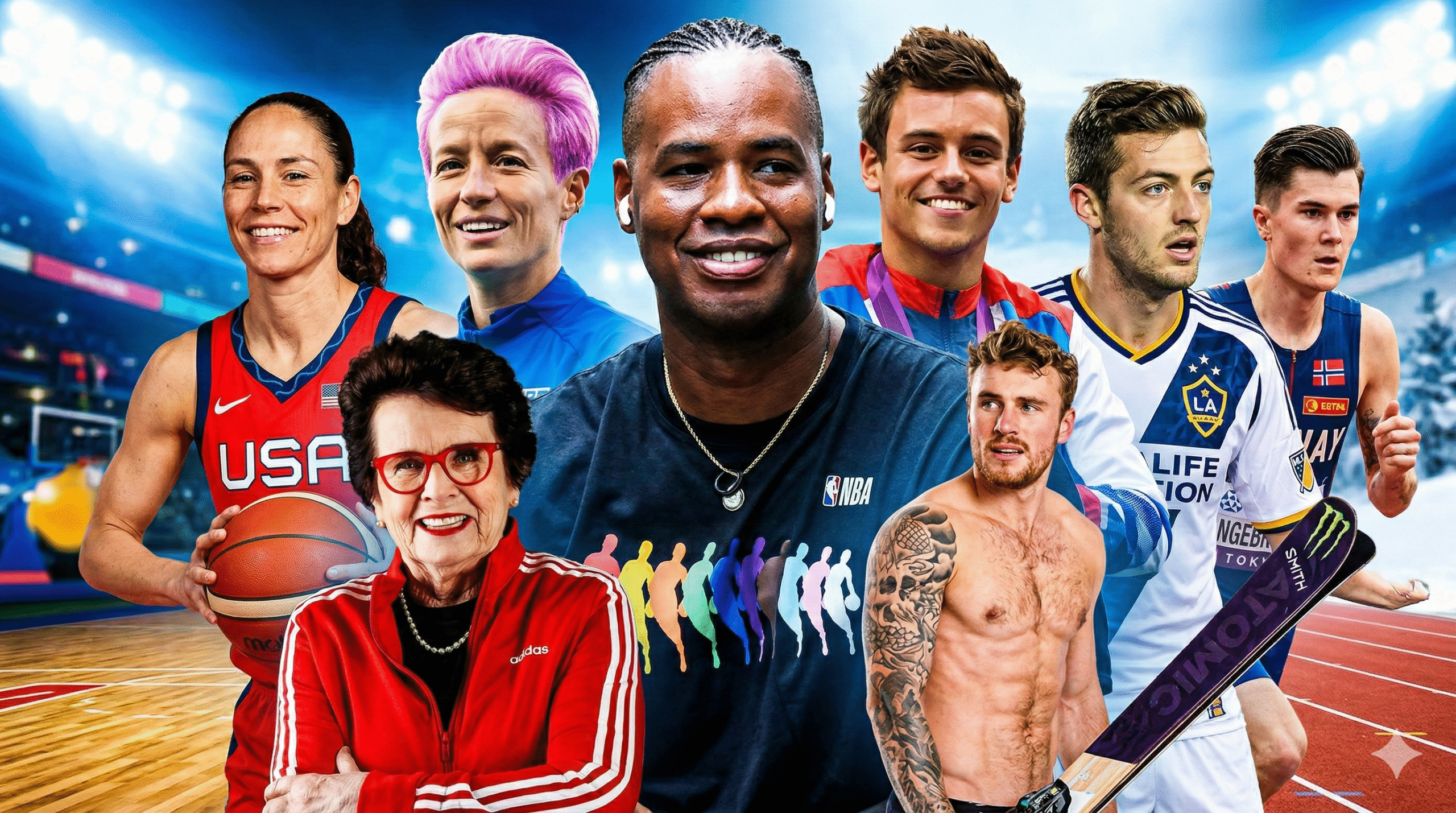
When Jason Collins came out in 2013, he became the first openly gay active player in a major U.S. men’s professional league. At the time, Collins was a veteran NBA center nearing the end of his career—but the impact of his announcement extended far beyond basketball. President Barack Obama called him personally, and the sports world was forced to confront a long-standing contradiction: a league filled with progressive messaging had never had an openly gay player on the court.
In soccer, Robbie Rogers’ journey was equally influential. After coming out in 2013, Rogers initially retired, citing the emotional toll of hiding. Months later, he returned to play for the LA Galaxy, becoming the first openly gay male athlete to compete in Major League Soccer. His comeback offered a powerful counter-narrative: coming out didn’t weaken him—it freed him.
These early trailblazers didn’t just change public perception; they changed policy, conversation, and possibility.
Women Athletes: Leading the Way
Long before men’s professional sports caught up, women athletes—particularly in soccer, basketball, and individual sports—were already out, vocal, and successful.
Megan Rapinoe, two-time World Cup champion and Olympic gold medalist, has become one of the most recognizable athletes in the world. Openly gay and unapologetically political, Rapinoe has used her platform to advocate for LGBTQ+ rights, equal pay, and racial justice. Her legacy is as much about cultural leadership as it is about left-footed brilliance.
Similarly, basketball icon Sue Bird has combined longevity, excellence, and visibility. With multiple WNBA championships and Olympic gold medals, Bird’s openness about her sexuality—and her relationship with Rapinoe—has normalized queer identity at the highest levels of sport.
These athletes didn’t just come out; they thrived, proving that authenticity and excellence are not competing forces.
Individual Sports and Global Impact
In individual sports, visibility has often come with unique pressures—and unique influence.
British diver Tom Daley, who came out in 2013, has won multiple Olympic medals and become a global LGBTQ+ role model. His openness about mental health, marriage, and fatherhood has expanded the image of what a male athlete can be.
In tennis, Billie Jean King remains a towering figure. Outed in 1981 against her will, King nevertheless transformed that painful moment into decades of activism. Her fight for gender equality and LGBTQ+ inclusion reshaped not only tennis, but the entire sports landscape.
More recently, athletes like Gus Kenworthy (freestyle skiing) and Jakob Ingebrigtsen’s openly gay competitors in European athletics have shown how far visibility has spread—across sports, nations, and generations.
The Cost—and the Progress
Coming out in sports is still not without risk. Male athletes in contact sports remain underrepresented, and fear of backlash persists at youth and collegiate levels. Homophobia hasn’t vanished; it’s simply less tolerated, more challenging, and increasingly out of step with fans and sponsors alike.
What’s changed is the support structure. Teams now fly Pride flags. Leagues issue inclusion statements. Younger athletes grow up seeing role models who look like them—and love like them—on the biggest stages in the world.
That visibility saves lives. Studies consistently show that representation reduces isolation and improves mental health outcomes for LGBTQ+ youth. In sports, where identity and self-worth are so tightly bound, that impact is profound.
More Than Firsts—A Future
The significance of famous gay athletes is not just that they were “first.” It’s that they made it easier for those who followed—and are still following.
Their courage didn’t just open locker room doors. It expanded the definition of strength.
And as sports continue to reflect society rather than resist it, one thing is increasingly clear: the future of athletics is not just faster or stronger—but more honest.